

Table of Contents
ToggleThe Rise of Voice Search Optimization: How to Optimize Your Content for Voice-Activated Devices
Voice search optimization is no longer a future concept—it is already changing how people search online. Today, users are not just typing queries into search engines; they are speaking directly to their phones, smart speakers, and voice-activated devices. Whether it is asking Google for nearby services, checking business hours, or searching for quick answers, google voice search has become a daily habit for millions of users.
As a digital marketing professional with over 12 years of real-world SEO and content experience, digital karan has seen how businesses that adapt early to voice search gain a strong advantage. Brands that ignore voice search activation are slowly losing visibility, especially in mobile and local searches. This blog is written to help business owners, marketers, and content creators understand how voice search works, why it matters in 2026, and how to optimize for voice search using proven, ethical, and human-first SEO practices.
This guide is not theory. It is based on real SEO experience, search behavior analysis, and content strategies that work across Google SERP, featured snippets, ChatGPT, Gemini, and voice assistants.
Introduction to the Rise of Voice Search Optimization
Voice search optimization refers to improving your website and content so that it can appear as a direct answer when users speak a query instead of typing it. Unlike traditional search, voice queries are longer, more conversational, and often framed as questions. For example, instead of typing “best digital marketing agency,” users now ask, “Which is the best digital marketing agency near me?”
This change has a major impact on SEO. Voice search and SEO are closely connected because search engines aim to deliver one clear, accurate answer rather than a list of results. That means your content must be structured, clear, and helpful.
At digital karan, voice search optimization is treated as an extension of good SEO—not a shortcut. When content is written in a natural, human tone and answers real questions clearly, it automatically becomes voice-search friendly.
Why Voice Search Matters in 2026

Voice search matters in 2026 because user behavior has changed permanently. Mobile usage continues to grow, and people prefer speaking rather than typing, especially while driving, cooking, or multitasking. Smart devices are now part of everyday life, making voice search activation more common than ever.
Search engines like Google prioritize speed, relevance, and clarity. Voice queries demand instant answers. If your website is not optimized for voice search, it is less likely to appear in featured snippets, local packs, or AI-generated responses.
Digital karan has observed that businesses optimized for voice search often see improved overall SEO performance. This is because voice search encourages better content structure, faster page speed, and user-focused writing—factors that benefit traditional search rankings as well.
How Google Voice Search Works ?

To understand google voice search, it is important to know how it processes queries. When a user speaks, Google converts speech into text, analyzes intent, and searches for the most relevant answer. It often pulls responses from featured snippets, FAQ sections, and well-structured content.
Voice search relies heavily on natural language processing. This means search engines favor content that sounds natural when read aloud. At digital karan, content is written to sound like a real conversation, not a list of keywords. This approach improves trust, engagement, and search visibility.
Voice Search and SEO: How They Work Together

Voice search and SEO are not separate strategies. Voice search is simply a more advanced form of search that prioritizes user intent. Traditional SEO focused on short keywords, while voice SEO focuses on complete questions and contextual answers.
For example, “optimize website for voice search” is more likely to appear in content that explains steps clearly rather than pages overloaded with keywords. Digital karan focuses on intent-based SEO, which naturally supports both typed and voice searches.
How to Optimize for Voice Search Effectively
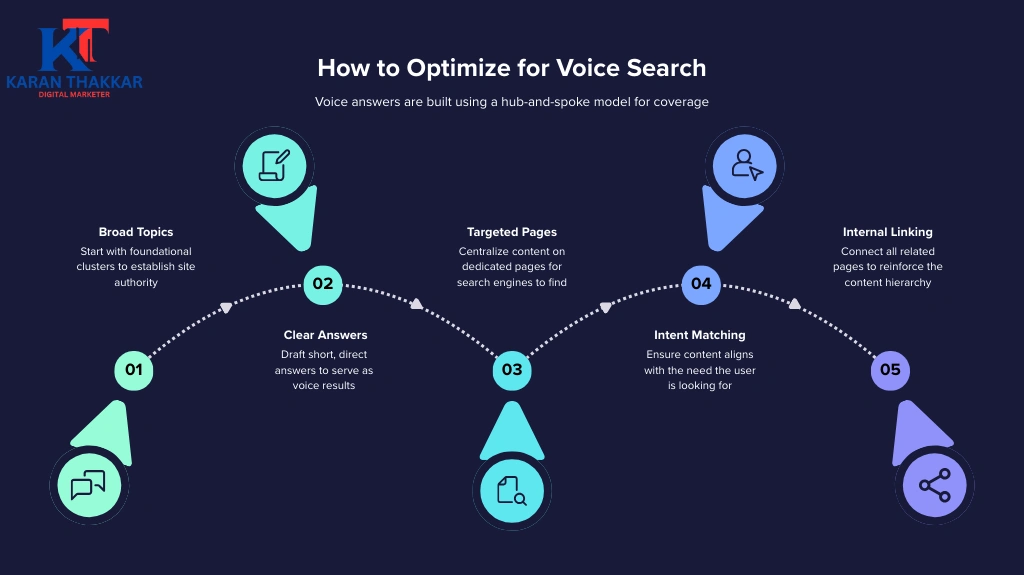
To optimize for voice search, your content must answer questions directly and clearly. Voice search results often provide a single spoken answer, so precision matters.
Key practices include using conversational language, answering “who, what, where, when, why, and how” questions, and structuring content logically. At digital karan, voice optimization starts with understanding how real users speak, not how algorithms work.
Clear headings, concise answers, and natural phrasing help search engines identify your content as voice-friendly.
Optimizing Your Website for Voice Search
To optimize website for voice search, technical and content improvements are equally important. Your website should load quickly, work smoothly on mobile devices, and present information clearly.
Voice search users expect fast answers. Slow pages or confusing layouts reduce the chances of being selected as a voice result. Digital karan ensures that voice-optimized websites are technically sound while remaining user-friendly.
Voice Search Content Marketing: Writing for Real Conversations
Voice search content marketing focuses on creating content that sounds natural when spoken aloud. This means avoiding robotic language and focusing on clarity.
For example, instead of writing “voice search SEO strategy benefits businesses,” write content that explains how voice search helps real users find businesses faster. Digital karan uses real customer queries and FAQs to shape voice-friendly content that feels human and trustworthy.
Voice Search SEO Strategy for Sustainable Growth
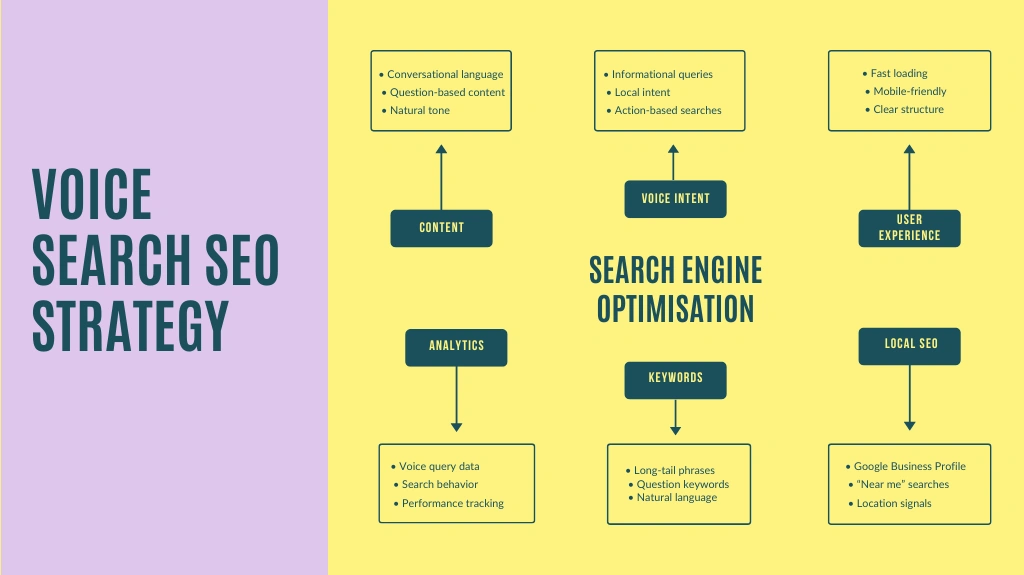
A strong voice search SEO strategy integrates traditional SEO with conversational optimization. This includes using long-tail phrases, answering common questions, and structuring content logically.
At digital karan, voice search SEO is treated as a long-term investment. Instead of chasing trends, the focus is on building content that remains useful and relevant over time.
Key Benefits of Voice Search Optimization
Voice search optimization improves user experience, increases visibility in featured snippets, and strengthens local SEO. It also prepares your content for AI-driven search platforms.
Businesses that work with digital karan often notice improved engagement because voice-friendly content is easier to read, understand, and trust. This leads to better conversions and stronger brand credibility.
Latest Voice Search Trends and Insights
Voice search trends show a strong shift toward conversational queries, local searches, and instant answers. Users increasingly rely on voice assistants for recommendations and quick information.
Search engines continue to improve their understanding of context, making voice search and SEO more interconnected. Digital karan keeps content strategies aligned with these trends by focusing on clarity, relevance, and user intent.

Challenges in Voice Search Optimization
Despite its benefits, voice search optimization comes with challenges. Competition for featured snippets is increasing, and content must be highly accurate.
Another challenge is maintaining a natural tone while covering SEO requirements. Digital karan addresses this by prioritizing human readability over keyword stuffing. When content is genuinely helpful, search engines reward it naturally.
Real-World Experience: What Works in Voice SEO
From real campaigns handled by digital karan, one thing is clear: voice search success comes from understanding users, not algorithms. Businesses that answer real questions clearly perform better than those that focus only on rankings.
Human-written, experience-based content consistently outperforms generic, AI-generated text in voice search results.
Conclusion: Preparing for the Voice-First Future
Voice search optimization is no longer optional. As voice-activated devices become more common, businesses must adapt their content and SEO strategies. By focusing on natural language, clear answers, and user intent, you can position your brand for long-term visibility.
With experience-driven strategies and ethical SEO practices, digital karan helps businesses prepare for the voice-first future without sacrificing quality or trust.
What is voice search optimization?
Voice search optimization is the process of improving website content so it can appear as a direct spoken answer when users search using voice-enabled devices like smartphones and smart speakers. It focuses on natural language, clear answers, and user intent rather than short keywords.
How is voice search different from traditional text search?
Voice search queries are more conversational and longer than text searches. Instead of typing keywords, users ask full questions. This is why voice search and SEO require content that sounds natural and answers questions clearly.
How does Google voice search choose answers?
Google voice search usually pulls answers from featured snippets, FAQ sections, and well-structured content. Pages that load fast, use clear headings, and provide direct answers are more likely to be selected.
How can I optimize my content for voice search?
To optimize for voice search, write content in a conversational tone, answer common questions clearly, use long-tail phrases, and structure content with headings and short paragraphs. This makes it easier for search engines to understand and read aloud.
Does voice search optimization help normal SEO?
Yes, voice search optimization improves overall SEO. Content written for voice search is usually clearer, more user-focused, and better structured, which also helps rankings in traditional Google search results.
Is voice search important for small businesses?
Voice search is especially important for small and local businesses. Many voice searches are location-based, such as “near me” queries. Optimizing for voice search helps small businesses appear in local and mobile searches.
How does voice search affect local SEO?
Voice search heavily impacts local SEO because users often search for nearby services using voice. Optimizing business information, clear content, and local relevance helps websites rank better in voice-based local searches.
What type of content works best for voice search?
FAQ-style content, how-to guides, and clear explanatory content work best for voice search. Voice search content marketing focuses on answering real questions in simple language rather than keyword-heavy text.
Do I need special tools for voice search SEO?
You don’t need special tools, but you do need the right strategy. Good SEO practices, fast website speed, mobile optimization, and structured content are enough to support voice search SEO strategy effectively.
Will voice search continue to grow in the future?
Yes, voice search trends show continuous growth as more users rely on smart devices. Optimizing now helps future-proof your content for voice search, AI tools, and evolving search behavior.